
Wearables now capture a steady stream of data: steps, sleep, heart rate, recovery, workouts, and other daily signals. But collecting numbers is not the same as having a clear view of your overall health record.
That gap is becoming the real story in consumer health technology. The future of wearables is not just better sensors. It is better organization of the information they create.
Why Wearables Matter More Now
Modern devices do much more than count steps.
Depending on the device, a person may already have access to:
- sleep duration and sleep consistency
- resting heart rate and workout heart rate
- activity totals and movement trends
- recovery and training metrics
- oxygen saturation or other home-device readings
The challenge is that these signals usually live in separate apps, while medical records, lab history, prescriptions, and visit notes often live somewhere else entirely.
That makes long-term review harder than it should be.
From Raw Numbers to Better Review
The next phase of wearables is less about collecting more data and more about making existing data easier to review.
That means:
-
Keeping records connected
Wearable data is more useful when it sits next to lab history, visit summaries, and other records instead of living in isolation. -
Separating fitness from medical context clearly
Fitness metrics can support fitness insights. Medical records and lab results need a different frame: summaries, organization, and review. -
Making records easier to read
Many people are not missing data. They are missing a usable way to review what they already have.
What Good Wearable Workflows Look Like
A strong wearable workflow is usually simple:
- collect data automatically from day-to-day devices
- keep a timeline of changes over weeks or months
- review those trends next to other records when needed
- make key terms and record sections easier to read
This is not about replacing a clinician. It is about reducing fragmentation and giving people a cleaner starting point for reviewing their own information.
Where Savva Fits
Savva is built around that organization problem.
It brings together:
- wearable and device data
- medical records
- lab history
- prescriptions and visit notes
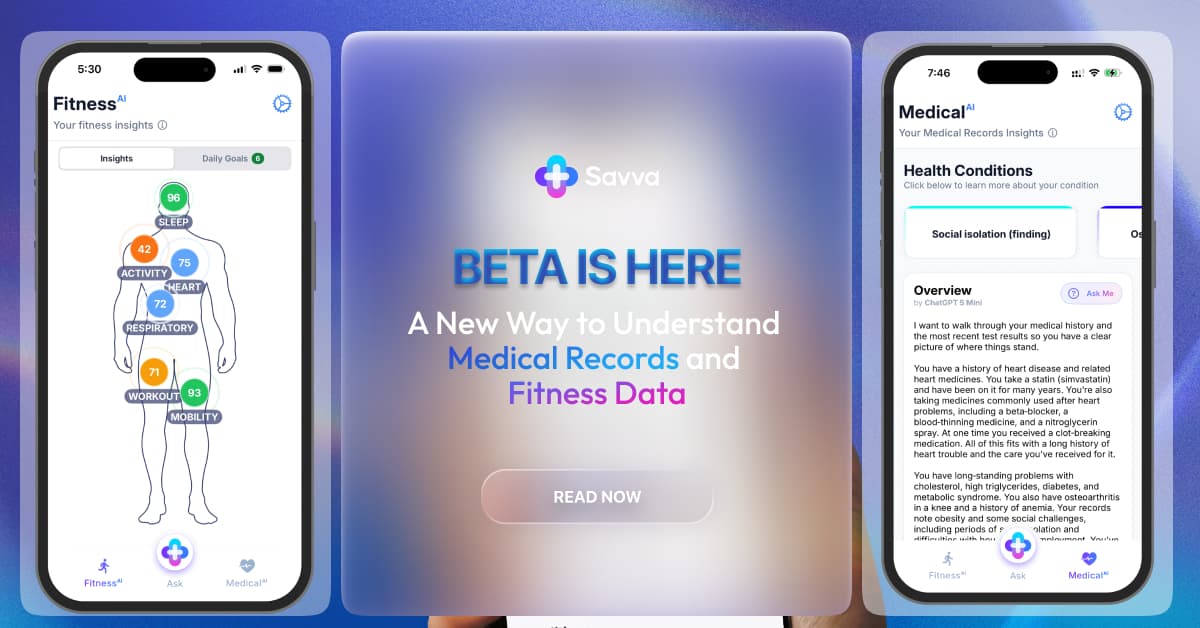
For fitness and wellness data, Savva can surface fitness insights such as activity, sleep, recovery, and workout trends.
For medical and clinical data, Savva focuses on readable medical summaries and record organization so people can review their records in one place instead of switching between multiple portals.
Why This Changes the User Experience
Without a connected system, people often end up asking the same basic questions over and over:
- Where is my latest result?
- Which portal has my last visit note?
- Did this change happen before or after that appointment?
- How do my device trends line up with the rest of my records?
Better wearable software does not just add graphs. It reduces that search burden.
A Better Model for Wearables
Traditional health apps often split the experience into separate silos:
- one app for activity
- one app for sleep
- another portal for records
- another account for labs
A better model is a single place to review the timeline.
That is where connected platforms matter most. The value is not just the device reading. The value is the ability to review that reading in context with the rest of a person’s health information.
Who Benefits
This kind of organization is useful for more than one kind of user:
- People focused on wellness: reviewing activity, sleep, and recovery in one place
- People managing multiple portals: seeing records and device data together
- Caregivers and families: getting a clearer timeline without chasing documents
- Anyone with long health histories: reviewing years of information in a more readable format
Final Thoughts
The future of wearables is not just more measurements. It is better continuity.
As more people collect daily data, the real opportunity is to connect those readings with the rest of their health information and present it in a way that is easier to review over time.
That is where platforms like Savva can be useful: not as clinical decision-makers, but as tools for organizing health records, displaying fitness insights, and making complex records easier to review.
FAQs
Q1: How is Savva different from Apple Health?
Apple Health stores and displays wearable data. Savva is designed to bring wearable data, medical records, and lab history into one place for review.
Q2: Does Savva provide fitness insights?
Yes. Fitness and wellness signals such as activity, sleep, and workouts can be shown as fitness insights.
Q3: What about medical records and lab results?
Savva uses medical summaries and record organization for medical and clinical data so those records are easier to review.
Q4: Which devices work with Savva?
Savva is designed for common wearable and health-data connections, including major fitness and wellness devices.
Q5: Why does this matter if I already have multiple apps?
Because the main problem for many people is not collecting more data. It is reviewing connected information across devices, records, labs, and portals.