
You check your phone almost constantly. You check the weather, the news, your messages, your bank balance. You almost certainly do not check your health. Not because it is unimportant. Because checking it well has been impossible. Your steps live in one app, your sleep in another, your weight in a third, and the lab result your doctor pulled last month is somewhere you have probably forgotten how to log into. So the daily check that would tell you whether yesterday helped or hurt your long-term health is the check that does not happen.
Why daily health checks fail
Most people who try to track their health daily quit by week two. The reason is almost never motivation. It is friction. Five apps to open. Three logins to remember. Numbers that mean nothing on their own. No synthesis at the end of it.
Habit research is consistent on this. New behaviors stick when the friction to perform them is low and the feedback is immediate (Lally et al., 2010). A daily health check that requires opening five apps is the opposite of low-friction. A check that returns six scattered numbers is the opposite of immediate feedback.
The work has not been hard because people are lazy. The work has been hard because the tools were never built for daily use. Most apps are built for an occasional check or annual physical, not for the moment a real daily habit fits into.
The gap in other apps
Each category of app you might use solves part of the problem and stops there.
Fitness apps tell you about your activity. They do not pull labs, blood pressure, or your medical record. They are about today, not the longer story.
Patient portals carry your labs and your visit history. They do not check in with you daily, and they only show you what one provider has on file.
Single-purpose trackers do one thing well. A glucose app. A blood pressure app. A weight app. Each one is a silo, and a daily read across silos is exactly what does not exist.
Generalist health apps surface a few wearable readings but stop short of bringing in your medical record. They show you the data they own, not the data your doctor owns.
The gap is the same in every direction. No app gives you a brief, honest read of your whole health each day, across activity, vitals, sleep, and what arrived from your doctor overnight.
What Daily Rewind actually does
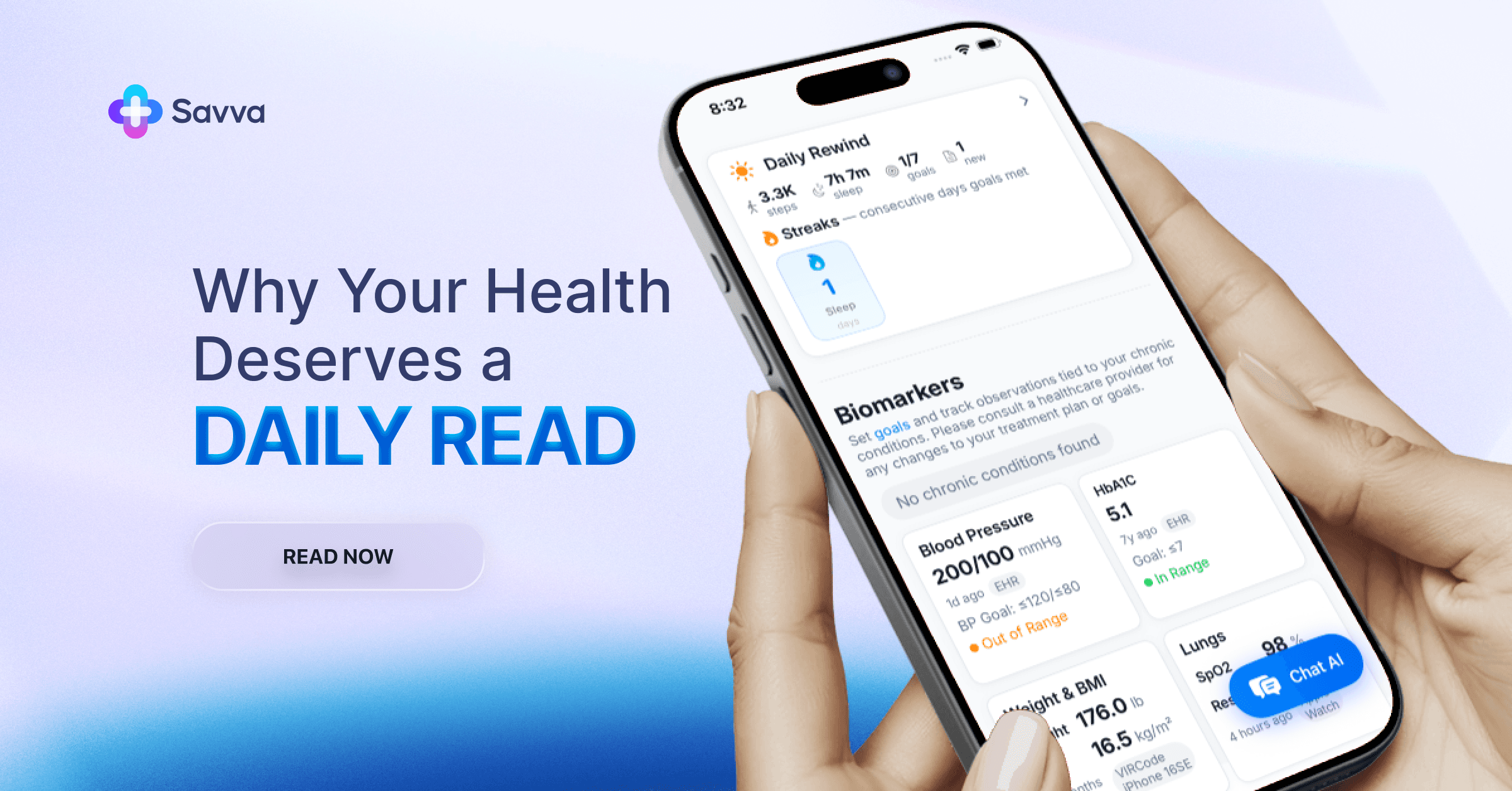
Savva builds the daily read into a single screen called Daily Rewind. One tap from the home screen. Six body scores, seven goal trackers, and a medical records check, in 60 seconds.
The home screen itself is the entry point. A body diagram with scores positioned on the figure where each domain lives. Activity at the chest. Heart slightly below. Lungs at the ribs. Workout at the core. Mobility at the legs. A "Today's Overall Score" sits at the bottom. Glance at the body. Tap the Daily Rewind card. The full read opens.
Body Scores, across six domains
Inside Daily Rewind, the first thing you see is a Body Scores grid. Six tiles, each carrying a score for the day. Workout. Activity. Heart. Lungs. Sleep. Mobility.
The scores are honest about gaps. If your watch did not capture sleep last night, the Sleep tile shows two dashes instead of inventing a number. If you have not logged a heart reading, Heart is also blank. The point is not to give you a fake reading. The point is to show you what was actually measured, and what was not.
The scores update across the day. A score of 53 on Mobility this morning becomes a score of 71 by evening if the steps come in. Watching the scores climb is the most concrete daily feedback Savva offers.
The six domains map to how clinicians think about whole-body health. Activity covers steps and movement. Heart covers cardiovascular signals. Lungs covers SpO2 and respiratory rate. Sleep covers time asleep. Workout covers logged training. Mobility covers daily movement.
The seven goals you set yourself
Below the scores, Daily Rewind shows your seven daily goals as a checklist. Exercise minutes. Steps. Stand minutes. Distance. Calories. Sleep hours. Zone 1 minutes.
Each row carries the goal target and your progress against it. 2,027 of 10,000 steps. 0 of 30 exercise minutes. A circular ring at the top shows how many of the seven you have hit so far. The point is not to assign you targets. The defaults are reasonable for someone tracking general fitness, but the targets are yours to adjust with the people who know your case.
Streak feedback is built in for the goals you hit consistently, but the daily moment is the point, not the streak.
Medical records, synced overnight
The third section of Daily Rewind is the one no other daily-summary app has. A Medical Records card that tells you whether anything new arrived from your providers overnight.
Most days it shows nothing new. The card reads "No new records since your last check-in. Your providers will sync automatically overnight," with the source labeled (your hospital system, the clinic you visit, whichever EHR your providers use).
The days when it does have something new are the days you actually want to know about. A new lab. A visit summary. A note. The Medical Records card surfaces these as part of your daily check, so the next thing waiting at your patient portal is not a surprise. (For more on why those records often feel scattered to begin with, see why your records feel split across portals.)
This is what makes Daily Rewind a health summary, not a fitness summary. The check covers your whole record, not just yesterday's steps.
What Daily Rewind is not
Daily Rewind is not a coach, a doctor, or a habit-tracker. It does not assign your goals, score your readings, or recommend medication changes. Some apps will tell you whether your activity is high enough or your sleep is good enough. Daily Rewind does not.
What it does is collapse the daily health check into one screen, so the friction stops being the reason you skip it. The interpretation belongs to you and your doctor. The synthesis belongs to Savva.
For more on the broader thinking, see the rise of preventive care 2.0.
When the friction is gone, the daily check stops being a project and starts being a moment. A 60-second read of yesterday, every morning, that builds across weeks into a real read of your health. Across years, those daily checks become something more: a longitudinal record that reveals patterns no single visit could.
Better data does not replace your doctor. It changes the conversation you have with them.
Your health. Finally understood.
FAQs
Q1. What does Daily Rewind actually show?
Daily Rewind shows three sections, in this order. Body Scores across six domains (Workout, Activity, Heart, Lungs, Sleep, Mobility). Daily Goals progress across seven trackers (Exercise, Steps, Stand, Distance, Calories, Sleep, Zone 1). Medical Records sync status, showing whether anything new arrived from your providers overnight.
Q2. When does Daily Rewind update?
The scores and goals update across the day as your wearable, manual entries, and medical record sync data in. The Medical Records card updates overnight, when your provider records sync.
Q3. Can I set my own goal targets?
Yes. Each of the seven goals has a default target you can adjust. Steps, sleep hours, exercise minutes, calories, distance, and the rest are yours to set with the people who know your case.
Q4. Does Daily Rewind cover my biomarkers?
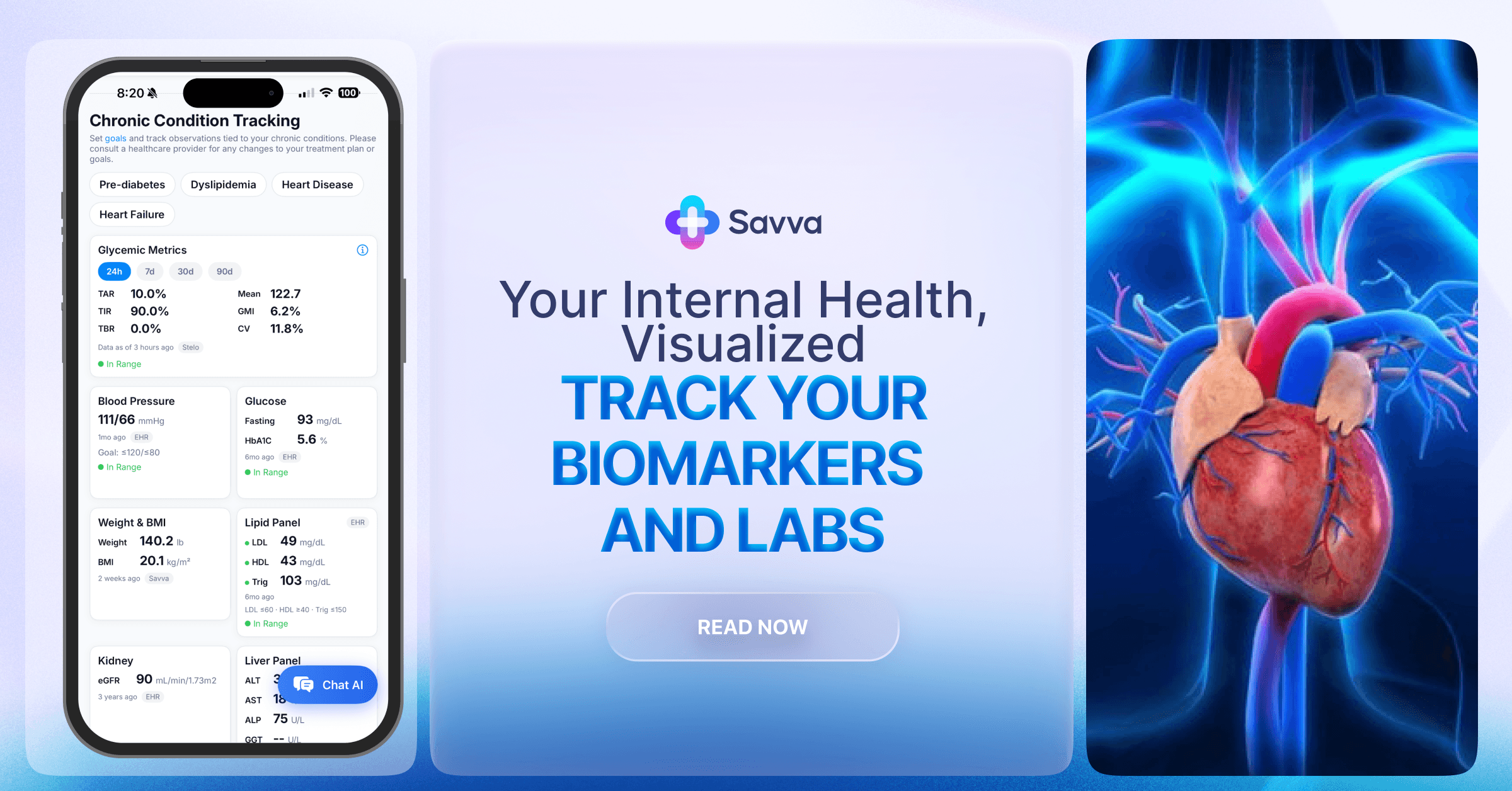
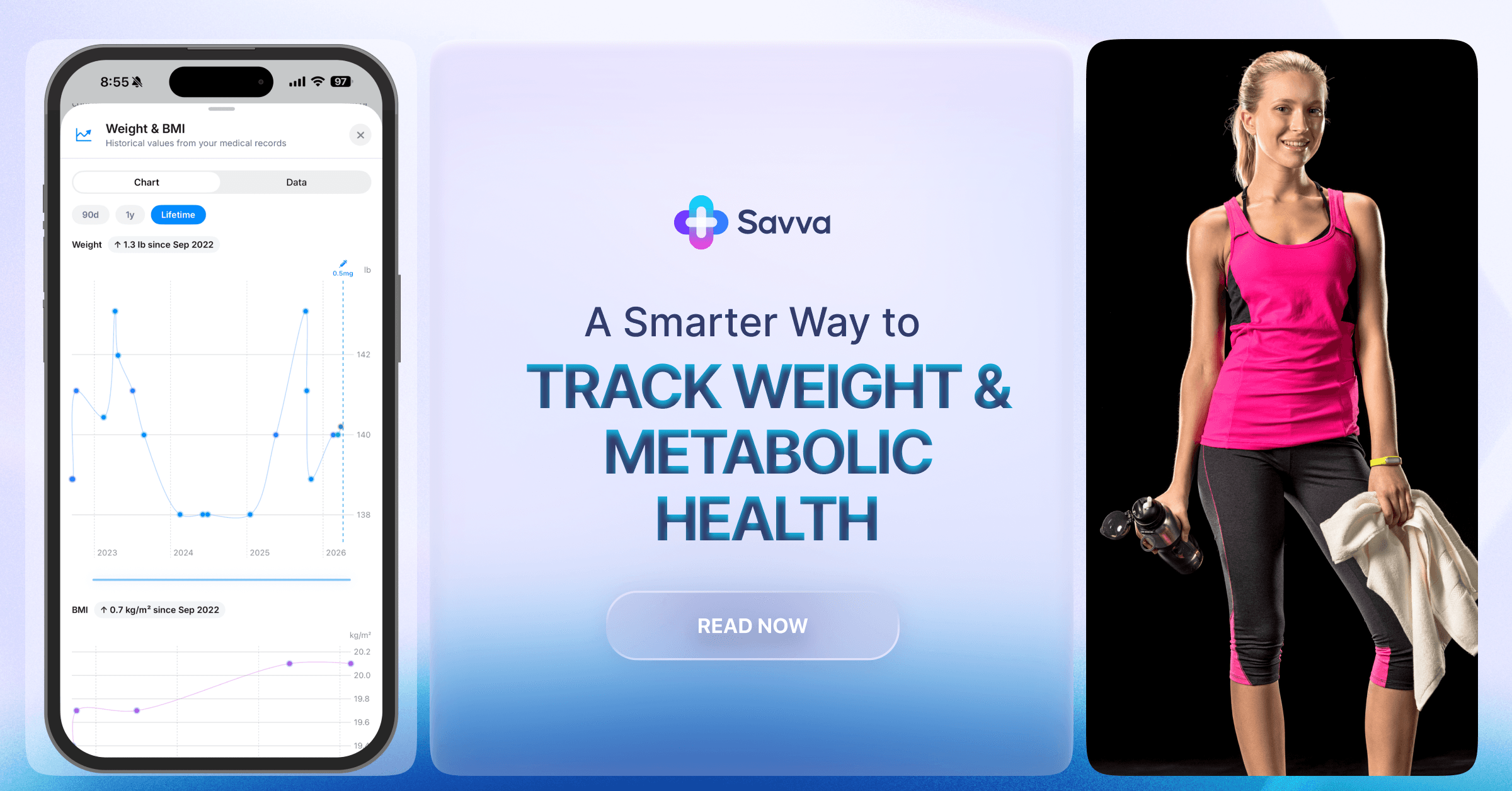
The body scores and goals in Daily Rewind cover daily activity and sleep. For a closer look at how Savva tracks blood pressure, HbA1C, glucose, weight, and lung readings over time, see your internal health, visualized.
Q5. Is my Daily Rewind data private?
Yes. The 13 AI models that power Savva run locally on your device. No cloud. No account required. Your daily summary, your body scores, and your medical record never leave your phone.
Q6. How long does the daily check actually take?
About 60 seconds. One tap from the home screen opens Daily Rewind, and the three sections (Body Scores, Daily Goals, Medical Records) are designed to be read at a glance rather than studied.
Q7. What happens if my wearable did not capture data overnight?
The relevant tile shows two dashes instead of a fabricated score. Daily Rewind is honest about gaps in measurement and will not invent a number to fill a missing reading.
Q8. Does Daily Rewind work without a wearable?
Yes. Manual entries and connected medical records still populate the relevant sections. Tiles tied to wearable-only data will show dashes until a wearable is connected, but the goals checklist and Medical Records card work independently.